◆   ALLIANCE, OHIO
Mega Surface Restoration
LOOKING TO PURCHASE A LASER?

Industrial laser cleaning equipment, startup training and support through our sister brand, Mega Laser Solutions.

EXPLORE LASER EQUIPMENT
04 / CHOOSE THE RIGHT PROCESS

BLAST IT.
OR ABLATE IT?

Two very different ways to remove unwanted material. Understand the tradeoffs before choosing a process.

SANDBLASTING VS LASER CLEANING · A PRACTICAL COMPARISON
Illustrative industrial application photograph ILLUSTRATIVE LASER CLEANING
MEDIA ABRASIVE GRIT VS NONE ADDED
SURFACE MECHANICAL IMPACT VS LASER ENERGY
COST COMPLETE PROJECT, NOT HOURLY RATE
01
TWO METHODS

DIFFERENT TOOLS.
DIFFERENT TRADEOFFS.

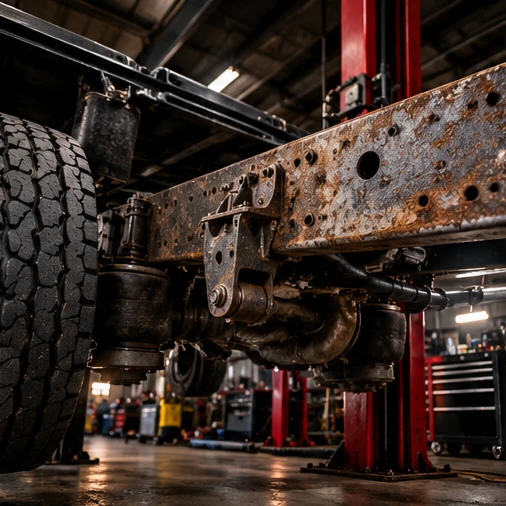
Illustrative rusted heavy industrial steel chassis
01 / ABRASIVE BLASTING

MEDIA DOES THE WORK.

Compressed air accelerates grit or other abrasive material against the surface. It can be efficient for extensive corrosion and creates mechanical surface profile—but requires containment and cleanup of spent media.

VS
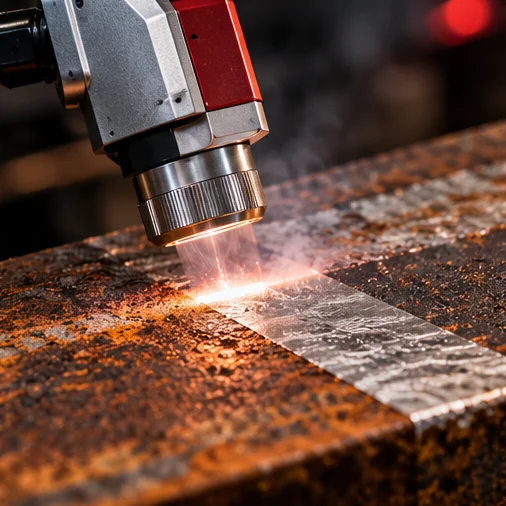
Illustrative laser cleaning steel rust
02 / LASER ABLATION

LIGHT DOES THE WORK.

Controlled laser energy removes suitable oxides, coatings or residues without adding abrasive media. It can target localized areas, but still generates fumes and particulates and requires strict Class 4 laser controls.
02
SIDE BY SIDE

WHAT ACTUALLY
CHANGES?

CONSIDERATION ABRASIVE BLASTING LASER CLEANING
BLASTING MEDIA Consumes and disperses abrasive media No abrasive blasting media added
SEAMS & CAVITIES Grit can collect in gaps and concealed areas Avoids introducing abrasive grit
SURFACE EFFECT Mechanical peening or erosion possible; useful anchor profile Localized thermal effects possible; surface profile must be verified
THIN BODY PANELS Aggressive technique can stretch or distort sheet metal Careful pulsed settings can help; heat distortion is still possible
DISASSEMBLY May require more masking, stripping and protection May permit selective in-place work, when safe
PRODUCTION SPEED Often economical for large areas and heavy scale May be slower over large or thick deposits
CONTAINMENT Dust/media capture and waste handling required Laser enclosure, fire precautions and fume extraction required
COATING READINESS Defined roughness often easier to specify May require additional profiling or preparation

General considerations only. Results depend on material, process parameters, operator skill, containment and coating requirements.

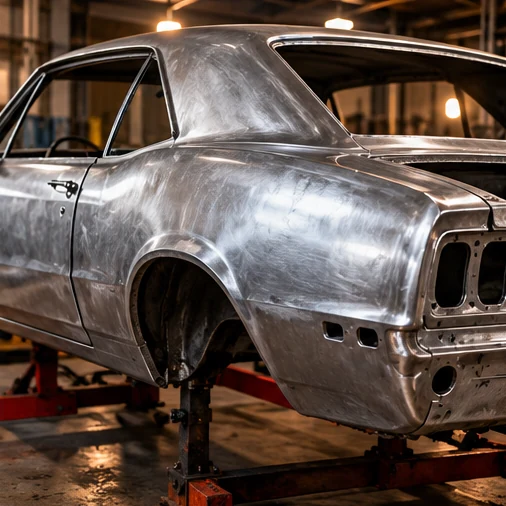
Illustrative bare-metal classic car body panel
Illustrative classic-car restoration bodywork
03
THIN SHEET METAL

WHAT ABOUT
WARPING?

For classic car bodies, panel distortion is a legitimate concern. Aggressive abrasive blasting can mechanically stretch thin sheet metal. Laser cleaning avoids that abrasive impact, but incorrect laser parameters can overheat or distort panels too.

The goal is not “laser never warps.” The goal is choosing a process—and operator technique—that protects the part.

ASK ABOUT A BODY PANEL
04
PROJECT ECONOMICS

THE HOURLY RATE
ISN’T THE WHOLE JOB.

01

TRANSPORT

Can the equipment stay on-site?

02

DISASSEMBLY

What must be removed or masked?

03

CLEANUP

How much debris and spent media must be handled?

04

DOWNTIME

How long is the asset out of service?

Laser is not always cheaper. Abrasive blasting may deliver the best overall value on large, heavily corroded structures or when a defined surface profile is essential.

LET’S DISCUSS YOUR APPLICATION

START WITH
THE JOB.

Send me the material, size, coating condition and intended finish. We can talk through the method that makes sense rather than forcing a technology onto the project.